 Nexus Tech Trends • • 1,211 words • 7 min read
AI Voice Cloning Scams: Set Up a Family Safe Word Today
Scammers clone a loved one's voice from 3 seconds of audio. Learn how AI voice cloning works and set up a family safe word in five minutes to stay safe.
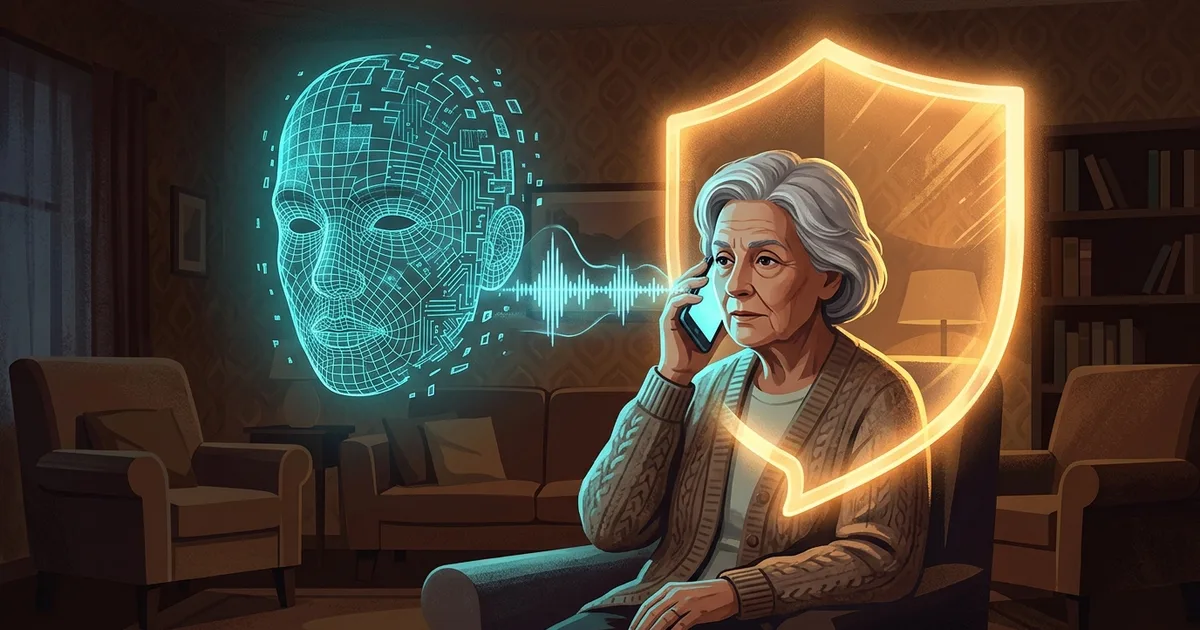
TL;DR (Direct Answer): Scammers can now copy a loved one's voice from just a few seconds of audio taken from social media or voicemail. They use that cloned voice to fake an emergency call and pressure you into sending money fast. The simplest defense is a family safe word: a secret phrase that only your family knows and that a caller must say before you act. It takes five minutes to set up and beats any app on the market.
The Call That Sounds Exactly Like Your Child
Imagine your phone rings. It's your daughter, sobbing. She's been in an accident and needs money right now. Every instinct tells you to help.
Except it isn't her. It's a deepfake, which is fake audio or video generated by AI to imitate a real person. Voice cloning (ses klonlama) works like a skilled impressionist who only needs to hear someone briefly before copying them. Modern AI needs about three seconds of audio. A birthday video on Instagram is plenty.
This is why you don't need to be famous or tech-savvy to be a target. Scammers aren't after celebrities. They're after anyone with a voice online and a family who loves them. A 2023 McAfee survey found that one in four adults had experienced an AI voice scam or knew someone who had.
How a Voice Cloning Scam Works, Step by Step
Think of it as a four-part heist.
[1] Harvest voice  →  [2] Clone it  →  [3] Fake caller ID  →  [4] Panic script
   (TikTok, voicemail)  (minutes)     (looks like "Mom")     (accident, arrest, kidnap)
This diagram shows how each stage feeds the next, ending in pressure designed to stop you thinking.
Harvesting: Scammers grab clips from public videos, podcasts, or your voicemail greeting.
Cloning: They feed the clip into a cloning tool, often free, which learns the voice's tone and rhythm in minutes.
Spoofing: Caller ID spoofing means faking the number that appears on your screen. The call can look like it's from your child's phone.
Urgency: The script is always a crisis, such as a crash, an arrest, or a kidnapping. Panic shuts down careful thinking, and that's the whole point. If you want to see how AI voices and models behave in practice, our AI Playground lets you experiment safely.
Comparing Your Defenses
| Defense | How it helps | Weak spot |
|---|---|---|
| Family safe word | Clone can't know a secret never posted online | Must be agreed in advance |
| Call-back verification | You reach the real person on a saved number | Hard if they really are unreachable |
| Personal-knowledge questions | Tests shared memories | Answers often leak via social media |
| Carrier spam filters | Blocks known scam numbers | Spoofed numbers slip through |
| Voice-detection apps | Flags synthetic audio | Unreliable; AI improves faster than detectors |
High-tech tools chase the fake. The safe word ignores the fake entirely. It doesn't matter how perfect the voice sounds if the caller can't say the word. That's why the low-tech option wins for everyday digital security (dijital güvenlik).
Set Up Your Family Safe Word in 5 Minutes
Pick the word. Choose something memorable but impossible to Google. "Purple waffle Tuesday" beats your dog's name or anyone's birthday.
Share it only in person. Never text or email it. Messages get hacked, backed up, and forwarded.
Write a one-page protocol. Tape it inside a kitchen cupboard so everyone knows the drill:
- Hang up.
- Call back on the number saved in your contacts.
- Ask for the safe word.
Make voicemail greetings generic. Use the default robot voice instead of recording your own.
Limit public voice clips. Set family videos to private where you can. You don't have to vanish online; just stop handing out free samples.
Curious how systems like this are engineered? Explore our Interactive Engineering Simulations.
Myths, Mistakes, and Real Stories
"I'd recognize my own child's voice." Under panic, you won't. That's what the script is designed for.
Using a pet's name or birthday. These are often on Facebook already.
Trusting caller ID. It can be faked in seconds.
"Only celebrities get cloned." Ordinary families are the main target because they react emotionally.
Believing detection apps are reliable. They miss plenty of fakes.
Real-world cases
In 2023, Arizona mother Jennifer DeStefano got a call from her "daughter" screaming and begging for help, followed by a man demanding a ransom. Her real daughter was safe on a ski trip. One call-back or one safe word would have ended it in seconds.
Businesses get hit too. In 2019, a UK energy firm wired about €220,000 after a manager heard what sounded like his boss's voice approving the transfer. The same rule applies: verify through a second channel before money moves.
Frequently Asked Questions (FAQ)
How many seconds of audio does a scammer need to clone a voice?
Some research tools can produce a recognizable clone from just three seconds of clear audio. Better results come from 30 seconds to a minute, which is easy to find in one social media video or podcast clip. Background noise makes cloning harder, but not impossible. The practical takeaway: assume any public recording of your voice could be used, and rely on verification instead of hoping your voice is hard to copy.
Can a voice clone hold a live, interactive conversation?
Increasingly, yes. Real-time voice changers let a scammer speak and have their words come out in your loved one's voice instantly. Most scam calls still use short pre-recorded clips plus a live "kidnapper" or "lawyer" who does the talking. Either way, a live clone can't guess a safe word it never heard. That's why asking for the word works even against the most advanced and convincing tools available today.
What if a family member forgets the safe word?
Don't panic, and don't send money. Hang up and call them back on the number saved in your phone. If you can't reach them, contact another relative, their school, or their workplace. A real emergency will still be real ten minutes later. Afterward, choose a new word together in person and practice it occasionally, perhaps at family dinners, so everyone remembers it under stress.
Should I stop posting videos of my family online?
You don't need to disappear from the internet. Simply reduce easy samples. Set accounts to private, share videos with close friends only, and avoid long clips of children speaking directly to the camera. Replace personal voicemail greetings with the default automated message. These small changes make you a less convenient target. Combined with a safe word, they give strong protection without giving up the joy of sharing.
Who should I call if I think I'm being targeted by a voice cloning scam?
First, call the real person on their saved number to confirm they're safe. If money was requested or sent, contact your bank immediately, since fast action can sometimes stop a transfer. Then report the scam to local police and your national fraud agency, such as the FTC in the US or Action Fraud in the UK. Reporting helps authorities track scam networks and warn other families.